Every job below is one we do ourselves across Lodi.
We hang 1/2 inch board on walls and 5/8 inch on ceilings where the span calls for it, screwed every 12 inches into the studs. Seams get staggered so no joint lines up with the one below it. Good for new additions, remodels, or a room that's down to the studs after a leak.
Nail pops, doorknob holes, and cracked corners get cut back to solid board and patched with the same thickness drywall, not just filled with mud. Small holes get a California patch, bigger ones get a full piece screwed to blocking. Either way the repair gets taped and feathered out until it's invisible under paint.
Paper tape set in the first coat, then two more coats feathered wider each time, sanded flat between. We use setting-type compound on anything that needs a same-day second coat, regular joint compound when the schedule allows it to dry overnight. Corner bead gets checked for straight lines before any mud goes near it.
Orange peel, knockdown, skip trowel, we spray a test patch on scrap board first so the pattern matches before it goes on your wall. Hopper pressure and mud thickness both change how the texture lands, and every house seems to have its own slightly different pattern from when it was built. We match it by eye and by hand, not off a factory setting.
We scrape the texture off, skim coat the ceiling, and sand it smooth, or retexture it if that's what you want instead. Ceilings built before the 1980s sometimes get checked for asbestos before we touch them, worth doing if yours hasn't been tested. Once it's down you can go smooth, knockdown, or leave it primed for an accent finish.
Shared walls between an attached garage and the house call for 5/8 inch Type X drywall for fire separation, and the ceiling under living space usually does too. We hang it to code, tape it, and leave it ready for paint. Most garages skip texture, but it gets matched if the rest of the house has one.
Drywall that's taken on water from a roof leak or a burst pipe loses its strength even if it looks fine from across the room, so we cut it back to dry, solid board before patching. Stains get sealed with a stain-blocking primer first so they don't bleed through new paint. If the leak is still active, that gets fixed before we close the wall back up.
A straight crack along a ceiling seam is usually tape failure, fixed with new tape and a few coats of mud. A crack that runs diagonal from a corner is more often truss uplift or settling, and calls for a flexible joint instead of a rigid patch, or it comes back next winter.
Extra layers of drywall, resilient channel, or sound-rated board cut down noise between bedrooms, home offices, or a shared wall with a neighbor. We can add mass with a second layer of 5/8 inch board or decouple the wall with channel, depending on the noise and the budget. Neither one makes a wall silent, but both make a real difference.
Office buildouts, tenant improvements, and small commercial spaces get the same attention to fire rating and finish level as a house, often with tighter deadlines. We work around open hours when needed and can phase the work room by room.
Four steps, and no surprises in any of them.
You tell us what you want doing, we look at what is actually there, and we ask the awkward questions early.
In writing, itemised, free. If something might add cost later we flag it now rather than at the end.
Same crew throughout. We cover your floors, keep the dust down and tidy up before we leave each day.
You point out anything you are not happy with and we fix it before the invoice, not after.
A few examples of walls and ceilings we've patched, taped, and textured.
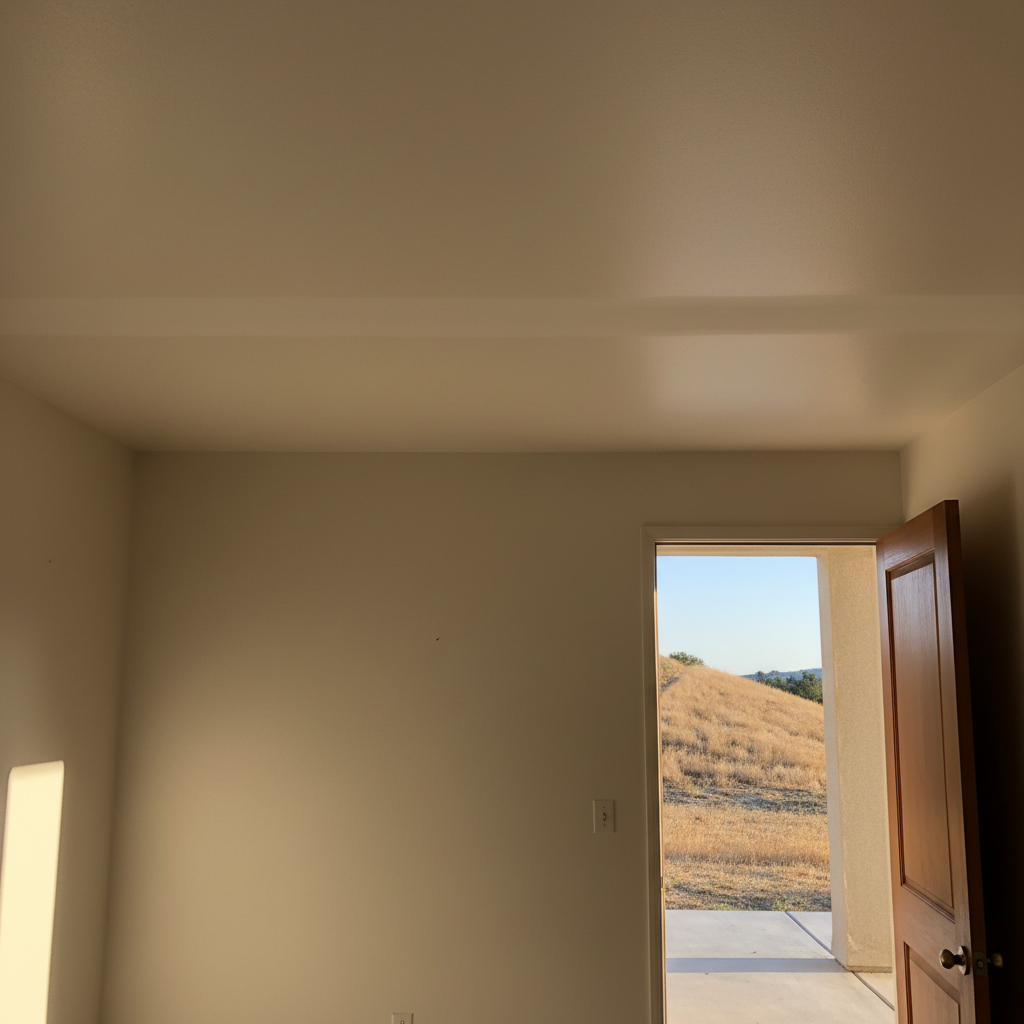
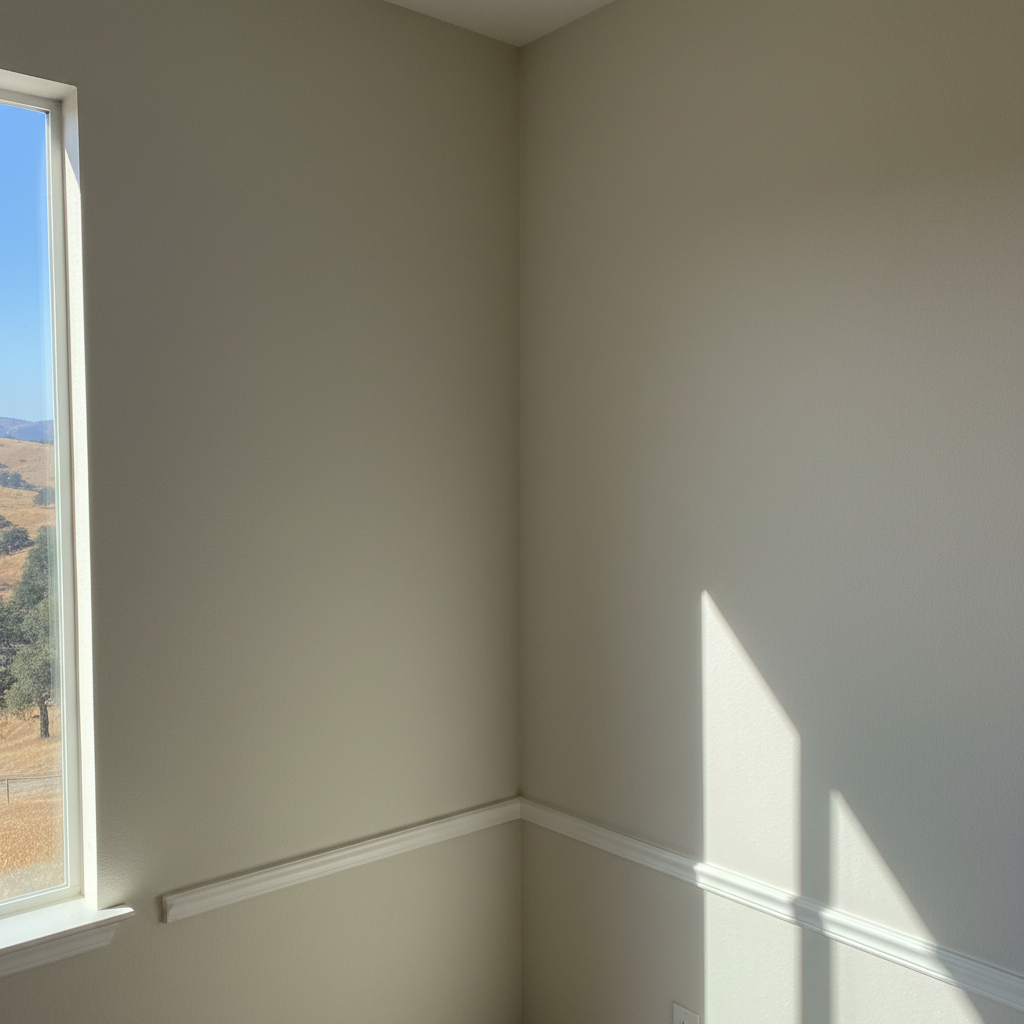
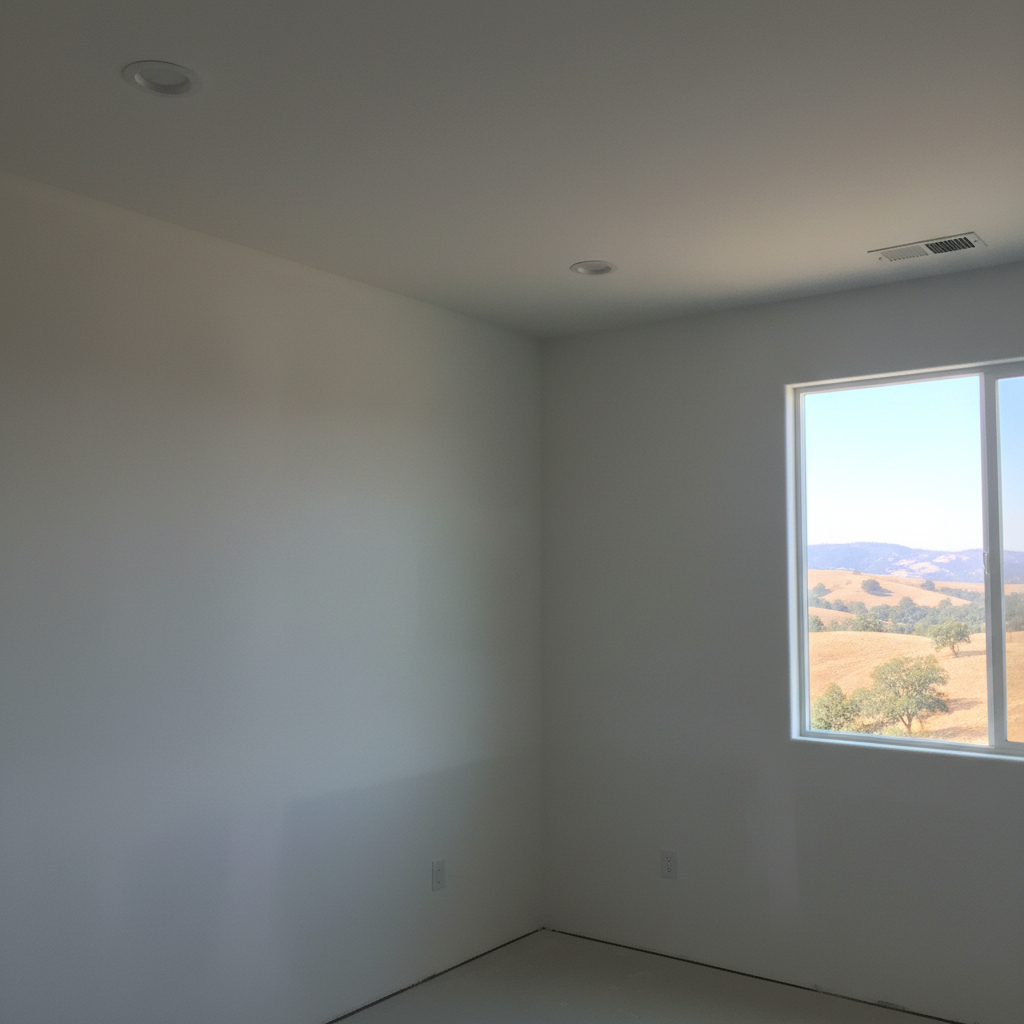
Drywall installation and repair across San Joaquin County.
What to expect once a drywall project is underway.
Describe the problem and we will tell you what it probably is. No obligation.